
 647-348-4995



- April 30, 2026
-
 Liam Hunt
In a recent survey conducted by TD and Maru Public Opinion, it was revealed that about 40% of small business owners do not have any form of business insurance in Canada. That is a surprisingly high number when you consider how quickly one lawsuit, property loss, cyber incident, or client dispute can put a small business under pressure.
Need business insurance without the usual back-and-forth?
If you want a fast online quote and a simpler way to compare small business coverage, Zensurance is one of the first places I’d check. It operates as an online business insurance brokerage, helping Canadian business owners compare coverage options from insurance partners.
Below, I’ll compare some of the best small business insurance companies and brokers in Canada, explain what types of coverage most business owners should understand, and answer common questions about business insurance quotes, liability coverage, costs, and online policies.
Affiliate disclosure: This page contains affiliate links. If you use them, we may earn a commission at no additional cost to you. That helps support our content.
Insurance disclaimer: This article is for general education only and should not be taken as insurance, legal, or financial advice. Coverage, exclusions, pricing, and availability vary by business, province, insurer, and policy. Always confirm details with a licensed broker, insurer, or qualified professional before buying coverage.
Best Small Business Insurance in Canada: Quick Comparison
If you are short on time, here is a simple comparison of popular business insurance providers and platforms in Canada. I’ve included both traditional insurers and online brokerages because many small business owners care less about the label and more about getting the right coverage at a fair price.
| Company | Best For | Broker or Insurer? | Standout Feature |
|---|---|---|---|
| Zensurance 🏆 Best Overall | Small businesses that want fast online quotes | Online brokerage | Simple online process and access to multiple insurance partners |
| Intact Insurance | Businesses that want a large national insurer | Insurer | Broad commercial coverage and strong Canadian presence |
| Aviva Canada | Professional services and industry-specific coverage | Insurer | Large product range for different business types |
| The Co-operators | Business owners who prefer local advisor support | Insurer/advisor network | Community-focused service model |
| Desjardins General Insurance | Quebec-based businesses and Desjardins clients | Insurer/financial group | Strong brand recognition in Quebec |
| Northbridge Insurance | Commercial businesses with more specialized needs | Insurer | Commercial insurance and risk management focus |
| Economical Insurance | Businesses comparing traditional commercial policies | Insurer | Long operating history and commercial policy options |
| Travelers Canada | Businesses that want risk control resources | Insurer | Risk management tools and commercial insurance expertise |
How We Chose These Business Insurance Companies
To keep this list useful, I looked at the factors that matter most to Canadian small business owners rather than simply listing the biggest insurance brands. The ranking considers:
- Ease of getting a quote: Can a business owner start online, or do they need to go through a longer offline process?
- Coverage range: Does the provider offer common policies like general liability, professional liability, property insurance, cyber liability, commercial auto, or business interruption coverage?
- Business fit: Is the company useful for freelancers, consultants, retailers, contractors, healthcare professionals, technology companies, and other small business categories?
- Availability: Does the provider serve multiple Canadian provinces or focus on a narrower region?
- Trust and reputation: Does the company have a real presence in the Canadian business insurance market?
- Transparency: Does the company explain coverage, limits, and quoting clearly enough for a small business owner to make an informed decision?
No single provider is perfect for every business. A self-employed consultant, a restaurant, a construction contractor, and an online store can have very different insurance needs. That is why comparing more than one quote is usually a smart move.
Why Small Business Insurance Matters in Canada
Many small businesses can eventually face risks such as legal claims, customer injuries, property damage, professional errors, cyber incidents, or business interruption. The right insurance policy can help protect your company from a temporary setback becoming a financial crisis.
While business insurance is not legally required in every situation, provincial governments such as Ontario strongly recommend that business owners consider insurance. In some cases, specific forms of coverage may be required by law, contract, landlord, lender, professional association, or client agreement.
For example, if a customer slips and falls at your place of business, a general liability policy may help cover legal defence costs, settlements, or damages, depending on the policy. If you provide professional advice and a client claims your work caused a financial loss, professional liability insurance may be more relevant. If you store customer data, cyber liability coverage may be worth considering.
In short, small business insurance is not just another administrative expense. For many Canadian entrepreneurs, it is part of building a more resilient company.
8 Best Small Business Insurance Companies in Canada
Here are eight business insurance companies and platforms worth comparing if you run a small business in Canada.
1. Zensurance 🏆 Best Overall for Online Business Insurance Quotes

Zensurance is my top pick for many Canadian small business owners because it makes the quote process feel more modern and less intimidating. Instead of calling around manually, you can start online and compare business insurance options based on your industry, location, and coverage needs.
One important distinction: Zensurance is an online business insurance brokerage, not simply a traditional insurance company. That means it works with insurance partners to help business owners compare and access coverage.
- Location: Offices in Toronto, Ontario and Vancouver, British Columbia.
- Founded: 2016.
- Best for: Small business owners, contractors, consultants, freelancers, startups, and service-based businesses that want to start with an online quote.
- Coverage examples: General liability, professional liability, cyber liability, commercial property, product liability, and other business coverage options depending on your industry.
- Pricing note: Zensurance advertises policies starting as low as $19 per month for select businesses, but actual premiums vary based on your industry, risk profile, location, revenue, coverage limits, and claims history.
- Why it stands out: The online quote experience is one of the simplest starting points for Canadian entrepreneurs who do not want to chase multiple brokers manually.
- Get a Free Quote
- Read our Zensurance review
Want a simpler way to compare business insurance?
Zensurance is a strong starting point if you want a modern online quote flow instead of chasing brokers and paperwork.
2. Intact Insurance
Intact Insurance is one of Canada’s largest property and casualty insurers, making it a strong option for business owners who prefer working with a major national insurance brand.
- Location: Headquartered in Toronto, Ontario.
- Best for: Business owners who want a large Canadian insurer with broad commercial coverage options.
- Coverage examples: Commercial property, liability, commercial auto, equipment breakdown, and other business insurance products.
- Why it stands out: Intact has a large Canadian footprint and can be a strong fit for businesses that want traditional insurance support.
- Get a Quote
3. Aviva Canada

Aviva Canada is another major insurance provider with commercial insurance options for a wide range of industries. It can be especially useful for businesses looking for more traditional insurer-backed coverage.
- Location: Based in Markham, Ontario.
- Best for: Professional services, commercial businesses, and owners who want industry-specific coverage options.
- Coverage examples: Business property, liability, professional services coverage, and industry-specific insurance solutions.
- Why it stands out: Aviva has a broad business insurance product range and a long-established presence in Canada.
- Get a Quote
4. The Co-operators
The Co-operators can be a good fit for business owners who want advisor support and a more relationship-based experience. It offers business liability insurance and other commercial coverage options through its advisor network.
- Location: Headquartered in Guelph, Ontario.
- Best for: Business owners who prefer local guidance instead of a fully online process.
- Coverage examples: Business liability, commercial property, commercial auto, and other business insurance products.
- Why it stands out: The company has a community-focused model and advisor-based support.
- Get a Quote
5. Desjardins General Insurance
Desjardins is a major financial cooperative with strong brand recognition, especially in Quebec. It can be a practical option for business owners who already use Desjardins for banking, financial services, or other insurance products.
- Location: Based in Lévis, Quebec, with a major presence in Quebec and across parts of Canada.
- Best for: Quebec-based businesses and entrepreneurs who prefer a large Canadian financial group.
- Coverage examples: Business property, liability, vehicle coverage, and other business insurance products depending on your province and needs.
- Why it stands out: Desjardins has deep roots in Quebec and a large financial services ecosystem.
- Get a Quote
6. Northbridge Insurance

Northbridge Insurance focuses heavily on commercial insurance, which makes it a serious option for businesses with more specialized risk profiles. It may be especially relevant if your company needs more than a basic liability policy.
- Location: Headquartered in Toronto, Ontario.
- Best for: Commercial businesses, contractors, transportation companies, manufacturers, wholesalers, and businesses with more complex risk needs.
- Coverage examples: Small business insurance, liability, commercial property, fleet, transportation, and industry-specific products.
- Why it stands out: Northbridge has a strong focus on commercial insurance and risk management.
- Get a Quote
7. Economical Insurance

Economical Insurance, now part of Definity, is a long-standing Canadian insurer with commercial insurance products. It can be worth comparing if you want a traditional insurer with business liability options.
- Location: Based in Waterloo, Ontario.
- Best for: Small businesses comparing liability and commercial insurance options through established Canadian insurers.
- Coverage examples: Business liability, property, auto, and other commercial coverage options.
- Why it stands out: Economical has a long operating history and offers customizable commercial insurance products.
- Get a Quote
8. Travelers Canada
Travelers Canada offers commercial insurance products and risk management resources for different business types. It may be a good fit for business owners who want access to a large insurance brand with experience in risk control.
- Location: Canadian operations include offices in major markets such as Toronto.
- Best for: Businesses that want commercial insurance support from a large international brand.
- Coverage examples: General liability, property, commercial auto, cyber, and industry-specific insurance products.
- Why it stands out: Travelers has risk management tools and commercial insurance expertise across multiple sectors.
- Get a Quote
Availability, underwriting, pricing, and coverage details can vary by province and business type. Before choosing a policy, compare quotes, review exclusions, and confirm whether the provider is acting as the insurer, broker, or advisor.
Finding the Right Insurance Provider
Choosing the right insurance provider is as important as choosing the right type of coverage. A cheap policy is not always a good policy if it leaves out the risks your business actually faces.
When comparing providers, look for experience in your industry, transparent explanations of coverage, reasonable deductibles, clear exclusions, and a claims process you can understand. Resources like the Canadian Federation of Independent Business can also help business owners understand broader insurance challenges facing small businesses.
You may also want to compare insurance options by province. Business owners in Alberta, Ontario, Manitoba, Saskatchewan, British Columbia, Quebec, and the Atlantic provinces may face different pricing, regulations, risks, and insurance market conditions.
Prefer to get a quote online first?
That’s one reason Zensurance stands out. It gives Canadian business owners a quicker way to check coverage options before committing to anything.
Key Types of Insurance for Small Businesses
Most small businesses start by looking at general liability insurance, but that is only one piece of the puzzle. Depending on your industry, contracts, employees, equipment, and online exposure, you may need several types of coverage.
| Insurance Type | What It Helps Cover | Who May Need It |
|---|---|---|
| General Liability Insurance | Third-party bodily injury, property damage, and some advertising injury claims. | Most businesses that interact with clients, customers, vendors, or the public. |
| Professional Liability Insurance | Claims related to professional errors, negligence, advice, or services. | Consultants, accountants, marketers, designers, IT professionals, lawyers, and other service providers. |
| Commercial Property Insurance | Business equipment, inventory, furniture, tools, and other property after covered losses. | Retailers, offices, clinics, restaurants, warehouses, and businesses with physical assets. |
| Business Interruption Insurance | Lost income and operating expenses if a covered event temporarily shuts down your business. | Businesses that rely on physical premises, equipment, inventory, or steady cash flow. |
| Cyber Liability Insurance | Some costs related to data breaches, cyberattacks, notification, recovery, and liability. | Businesses that store customer data, process payments, use cloud systems, or operate online. |
| Workers’ Compensation | Workplace injury and illness coverage through provincial workers’ compensation systems. | Many businesses with employees, depending on province and industry. |
Factors That Influence Small Business Insurance Costs
The cost of business insurance in Canada depends on your industry, location, revenue, number of employees, coverage limits, deductibles, claims history, and the specific policies you choose.
For example, a low-risk consultant working from home may pay far less than a contractor, restaurant, manufacturer, or retailer with foot traffic. A business that needs $5 million in liability coverage will usually pay more than one that only needs $1 million or $2 million.
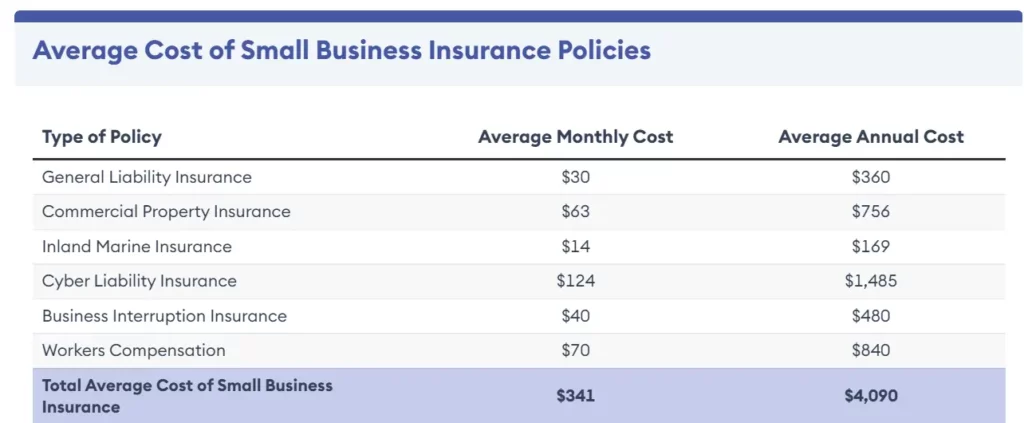
Note: This chart uses U.S. data for general context only. Canadian premiums vary by province, business type, risk profile, coverage limits, deductible, and insurer.
Here are the most common factors that influence business insurance pricing:
- Industry risk: Construction, food services, transportation, healthcare, and manufacturing often carry higher risk than consulting or office-based services.
- Business size: Revenue, payroll, staff count, and customer volume can all affect premiums.
- Location: Insurance costs can vary by province, city, claims environment, crime risk, and exposure to weather-related losses.
- Coverage limits: Higher limits usually cost more, but may be required by landlords, clients, contracts, or lenders.
- Deductibles: Choosing a higher deductible may reduce premiums, but it also increases your out-of-pocket cost if you make a claim.
- Claims history: A business with frequent or severe claims may pay more.
- Policy bundle: Combining liability, property, cyber, auto, and other coverage can change the final cost.
Maintaining a strong risk management strategy may also help reduce losses and make your business more attractive to insurers over time.
Best Practices for Buying Small Business Insurance
The best business insurance policy is the one that actually matches your risks. Before buying coverage, use this checklist:
- Identify your biggest risks: Think about customer injuries, professional mistakes, property damage, cyberattacks, product issues, employee injuries, and contract requirements.
- Compare multiple quotes: Pricing and coverage can vary significantly between providers.
- Read the exclusions: Do not only look at what is covered. Look closely at what is not covered.
- Check your limits: Make sure your coverage limits match your contracts, landlord requirements, and realistic exposure.
- Review annually: Your insurance needs may change as your revenue, employees, equipment, clients, and locations change.
- Ask about bundles: Some providers can combine liability, property, cyber, and other policies into a package.
Don’t Let Small Business Insurance Be an Afterthought
Insurance is not the most exciting part of running a business, but it can be one of the most important. A good policy can help protect your company from legal claims, property losses, cyber incidents, and unexpected disruptions.
Canadian small business owners should take time to understand their coverage options, compare quotes, and make sure their policy matches their real-world risks. Whether you start with an online brokerage like Zensurance or a traditional insurer like Intact, Aviva, Co-operators, Desjardins, Northbridge, Economical, or Travelers Canada, the key is to avoid guessing.
Ready to compare small business insurance options?
If you want to start with a provider that was built for speed and simplicity, Zensurance is a solid option to check first.
But liability insurance is not the only thing you need to protect and grow your business. You also need a reliable way to attract customers, build trust, and compete online. If you are trying to grow your company, consider investing in an SEO marketing strategy or a stronger content marketing strategy to support long-term growth.
Frequently Asked Questions About Small Business Insurance in Canada
What is the best small business insurance in Canada?
The best small business insurance in Canada depends on your industry, province, budget, and risk profile. For many small business owners who want a fast online quote, Zensurance is a strong starting point because it operates as an online brokerage and helps compare options from insurance partners. Traditional insurers like Intact, Aviva, Co-operators, Desjardins, Northbridge, Economical, and Travelers Canada are also worth comparing.
Is business insurance mandatory in Canada?
Business insurance is not mandatory for every business in Canada, but certain types of coverage may be required depending on your province, industry, employees, contracts, landlord agreement, lender requirements, or professional obligations. Workers’ compensation coverage, for example, is mandatory for many businesses with employees, depending on the province and industry.
How do I get a business insurance quote?
You can get a business insurance quote by contacting an insurer, speaking with a licensed broker, or using an online platform such as Zensurance. You will usually need to provide your business type, location, annual revenue, number of employees, years in operation, claims history, and the coverage types you want.
How much does small business liability insurance cost?
Small business liability insurance costs vary widely. A low-risk consultant may pay a few hundred dollars per year, while a higher-risk business may pay much more. Your final premium depends on your industry, location, revenue, coverage limits, deductible, claims history, and whether you add other policies such as property, cyber, commercial auto, or professional liability insurance.
What does general liability insurance cover?
General liability insurance usually helps cover third-party bodily injury, third-party property damage, and some advertising injury claims. For example, it may apply if a customer slips and falls at your business location or if your business accidentally damages a client’s property. Exact coverage depends on your policy wording, limits, and exclusions.
What is the difference between business liability insurance and general liability insurance?
Business liability insurance is a broad phrase that can refer to several types of liability coverage. General liability insurance is one specific type that typically covers third-party bodily injury and property damage. Professional liability insurance, product liability insurance, cyber liability insurance, and directors and officers insurance are other examples of business liability coverage.
Do home-based businesses need insurance?
Many home-based businesses should consider insurance because personal home insurance may not fully cover business equipment, inventory, client visits, business interruption, or liability related to business activities. If you run a consulting, ecommerce, beauty, design, coaching, repair, or professional service business from home, ask your insurer or broker what is and is not covered.
Can a sole proprietor get business insurance?
Yes. Sole proprietors can get business insurance. Common options include general liability, professional liability, commercial property, cyber liability, tools and equipment coverage, and commercial auto insurance. The right policy depends on what you do, where you work, whether you meet clients in person, and what risks your business faces.
What insurance does a consultant need?
Consultants often consider professional liability insurance because it may help protect against claims related to advice, errors, negligence, or professional services. General liability insurance may also be useful if you meet clients in person, attend events, rent office space, or visit client locations. Cyber liability may be relevant if you handle sensitive client data.
What is business interruption insurance?
Business interruption insurance may help replace lost income and cover certain ongoing expenses if your business is forced to temporarily close because of a covered event, such as a fire or other insured property loss. It does not cover every type of shutdown, so it is important to read the policy conditions carefully.
Can I buy business insurance online?
Yes. Many Canadian business owners can start the quote process online. Platforms such as Zensurance allow you to enter your business details and compare coverage options. Some traditional insurers also offer online quote tools, while others may direct you to an advisor or broker.
What insurance does a startup need?
A startup may need general liability, professional liability, cyber liability, commercial property, directors and officers insurance, or commercial auto coverage, depending on the business model. A software startup, restaurant, ecommerce brand, and local contractor will each have different insurance needs.
How can I find affordable small business insurance?
To find affordable small business insurance, compare multiple quotes, avoid buying coverage you do not need, choose appropriate deductibles, maintain a clean claims history, and review your policy annually. The cheapest policy is not always the best choice if it excludes important risks.
What business insurance do I need in Ontario, Alberta, BC, or Quebec?
The right business insurance depends more on your business activities than your province alone, but provincial rules can still matter. A business in Ontario, Alberta, BC, or Quebec may need to consider general liability, professional liability, property insurance, workers’ compensation, commercial auto, and industry-specific coverage. Confirm local requirements with a licensed broker, insurer, or provincial authority.
How often should I review my business insurance policy?
You should review your business insurance at least once a year or whenever your business changes significantly. That includes hiring employees, moving locations, adding services, buying equipment, signing larger contracts, increasing revenue, opening a new location, or storing more customer data.

Liam Hunt, M.A., is a writer and digital marketing specialist whose writing has appeared in the Vancouver Sun, Asia Times, and US News and World Report.

















Pingback: General Liability Insurance Cost: What Small Businesses Pay
Pingback: Small Business Insurance: Protect Your Company Today